Penpal Cultures Around the World
By Atik Hossain
Somewhere in Tokyo, someone is choosing a seasonal greeting before committing their first brushstroke to washi paper. In Senegal, a scholar is composing a letter in Ajami script , Arabic letters carrying Wolof words and continuing a tradition that predates European colonization. In Buenos Aires, a university student is tucking a photograph between two pages of a handwritten letter. In a small town in Bavaria, a retiree is selecting a stamp. In Australia, a memoirist is tracing the grown-up lives of the strangers who wrote to her as a child.
The letter is one of the few things that every civilization on earth has done, and done beautifully. Each region has added its own textures, rituals, and meaning to the act of putting words on paper and trusting them to the world. Every culture that has taken correspondence seriously has understood the same fundamental thing: a letter is not a message. It is a gesture. The physical act of writing, of choosing paper and ink, of folding and addressing and sealing. These are not inefficiencies to be engineered away. They are the meaning.
Here, we take the long way around the globe. Seven regions. Seven ways of writing to each other. And everywhere, the same impulse underneath it all.
East Asia: The Art of the Seasonal Soul
Japan has one of the world's most sophisticated traditions of written correspondence, built on a single foundational belief: before you say anything about yourself, acknowledge the world you both inhabit.
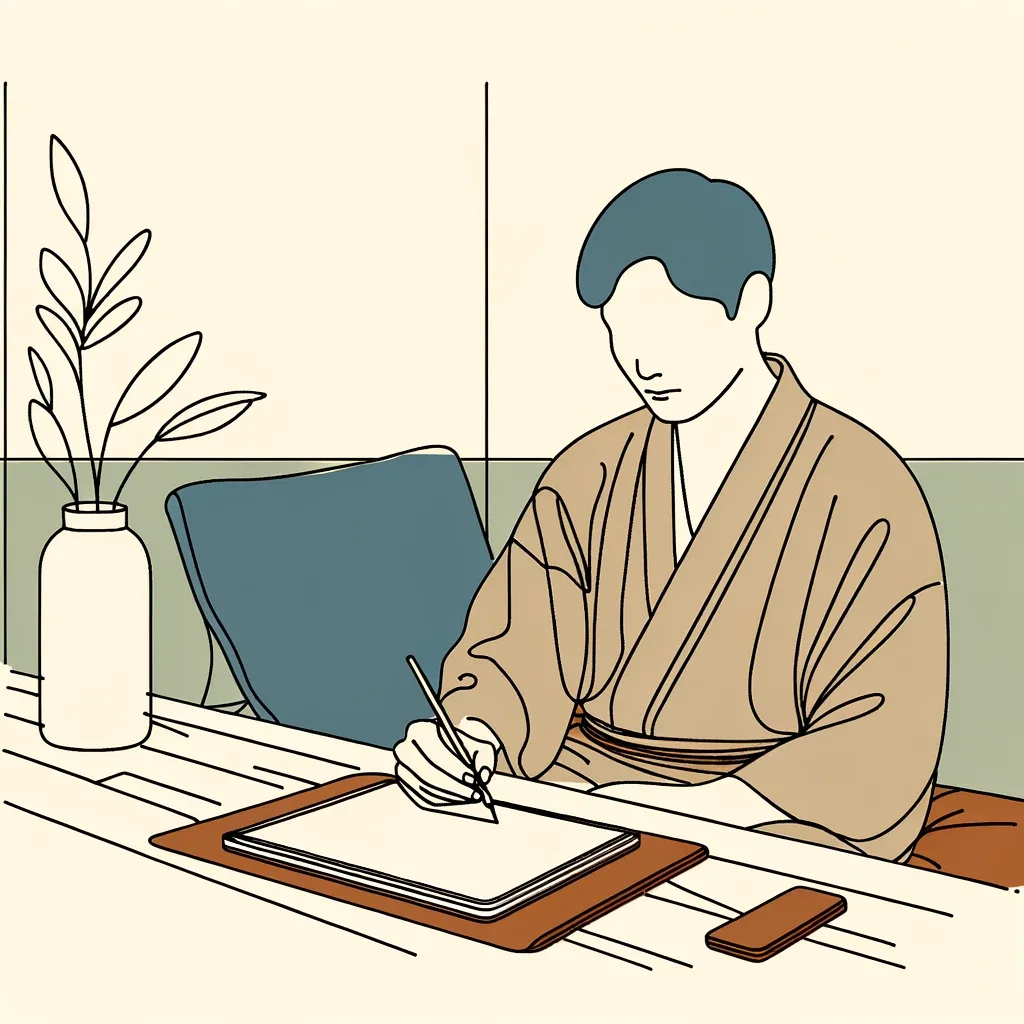
Formal Japanese letters open not with a greeting but with the season. The opening lines, kisetsuno aisatsu, or seasonal greetings are not pleasantries. They are a way of saying: I am here, in this moment, with you. I notice what the world looks like right now, and I thought of you while noticing it. A letter written in cherry blossom season mentions the cherry blossoms. A letter written in the first cold days of autumn notices the turning leaves. The writer has paused before speaking and that pause, in a world of instant messages, is the rarest thing.
"The cherry blossoms have already passed their peak, yet I hope this message finds you in good health and spirits."
Japanese formal letters are written vertically on “washi" which is a handmade paper crafted from the bark of specific trees, used in Japanese arts for over a thousand years. Running your fingers across a sheet of good washi, you understand almost immediately that what you write here matters. The paper itself demands it.
Traditional households stored letters in a “fumibako”, a lacquered wooden box, often decorated with cranes, plum blossoms, or bamboo, passed across generations. These boxes were included in wedding dowry sets, handed from mother to daughter. The fumibako tells us how Japan has historically treated correspondence: not as something to glance at and discard, but as objects with weight and permanence, worthy of a beautiful home.
China: Letters as History
In China, letter writing has been considered a literary art form since the Han Dynasty. The genre known as shu, personal correspondence . It was studied alongside poetry and classical prose. Calligraphy was inseparable from the letter itself; the quality of the brushwork was as much an expression of the writer as the words it formed. Great calligraphers' letters were copied, collected, and preserved not just for their content but as masterworks of line and form.
Chinese letters of the imperial era followed elaborate ritual conventions around address and self-deprecation. Referring to yourself humbly and the recipient with elevated honorifics was not mere courtesy, it was the grammatical structure through which respect was performed. A letter that violated these conventions was not just impolite. It was illegible, in the deepest sense.
Today, the tradition of meticulous, considered written communication persists in Chinese culture, even as digital messaging dominates daily life. The written word carries a weight and permanence in East Asian cultures that is difficult to replicate in the brevity of a text.
Europe: The Continent That Invented the Pen Pal
The word 'pen friend' first appeared in English in 1919. 'Pen pal' followed in 1931. But the practice they describe is far older. Europeans had been corresponding across borders for centuries, driven by proximity, curiosity, and the perpetual desire to learn each other's languages.
By the mid-twentieth century, schools across France, Germany, Scandinavia, and the United Kingdom were actively matching students with counterparts abroad. A French child writing in English to a classmate in London. A German teenager writing in French to a girl in Normandy. The letter was simultaneously a language lesson, a window into another life, and a friendship. All in the same envelope.
France: The Letter as Art Form
France has always treated the personal letter as a literary form. Voltaire corresponded with Catherine the Great. Flaubert wrote letters of novelistic length and craft. Simone de Beauvoir wrote to Sartre with astonishing intimacy and intellectual force. The French literary tradition does not separate correspondence from literature , it treats the personal letter as one of its highest expressions.
French pen pal culture carried this ambition. French correspondences often had a depth and self-consciousness that set them apart, the letters that were composed, revised, considered. The francophone pen pal network connected France not just with other European nations but with its diaspora across North Africa, West Africa, and the Caribbean, creating correspondences that were about solidarity across a shared tongue as much as language practice.
Germany: Meticulous, Warm, and Very Thorough
German pen pals particularly in the postwar decades, when international friendship carried extra political resonance and were known for the depth and detail of their correspondence. A letter from a German pen pal in the 1970s or 80s might run to many pages, covering school, family, local politics, music, and the texture of daily life in a way that read more like a diary than a letter.
"She was my German pen pal in the early 1980s, during the final years before the Berlin Wall fell. We wrote to each other for four years."
The International Youth Service, founded in Finland in 1952, became the primary organization matching young people across Europe and beyond. Countless lasting friendships were built entirely through this programme. The people who know each other's inner lives intimately and have never been in the same room.
Scandinavia: Correspondence as Civic Virtue
The Nordic countries approached correspondence with a civic-minded seriousness. Finland, the country that gave the world the IYS, treats letter writing as connected to its deeper values around clarity, honesty, and genuine communication. Scandinavian letters tend to be direct, warm, and unpretentious without the ornamental formality of Japanese letters or the self-conscious artistry of French ones, but striking precisely because their warmth is unannounced.
South Asia: Letters as Monuments
The Indian subcontinent has one of the world's richest and oldest traditions of written correspondence. The Mughal emperors treated letters as political instruments, literary works, and historical documents simultaneously. The drafting of official correspondence known as insha was considered a high art, and the scribes who practised it, munshis, were among the most educated and respected figures in courtly life.
These were not merely functional documents. A Mughal letter to a rival ruler or between poets was expected to display mastery of language, metaphor, and courtly convention. The correspondence that flowed across the subcontinent during the 15th through 17th centuries were written primarily in Persian, the shared language of culture and diplomacy represents some of the most deliberately crafted letter writing in human history. Sentences were expected to end with words of a specific metrical rhythm. A letter without musicality was a letter poorly written.
The Letters That Built the Diaspora
India's modern penpal tradition carries a different character: the letters that connected the subcontinent to its diaspora throughout the 20th century. A grandmother writing to her son in London. A father in Lahore corresponding with his daughter in Toronto. Written in Urdu, Hindi, Gujarati, Bengali, Tamil these letters crossed not just distance but entire worlds. They were lifelines, carrying news of births and deaths, marriages and monsoons, recipes and photographs and the scent of home folded into an envelope.
Bangladesh itself owes its name to correspondence; Chee Thee (চিঠি), the Bengali word for letter, is the origin of CheeThee LLC, the company behind Lettre. The word for letter is literally in our DNA.
"The letter was not a document. It was a world in miniature , pressed flat and sent across an ocean."
Middle East & North Africa: When Writing Is Sacred
The Arabic letter is not just a means of communication. It is, in the deepest sense, an object of contemplation. The tradition of Arabic calligraphy which UNESCO added to its Intangible Cultural Heritage list in 2022 , emerged from a theological conviction: that the word of God had been revealed in Arabic, and therefore the very shapes of Arabic letters carried a kind of divine significance. To write beautifully was a form of reverence.
During the great Arab medieval period, under the Umayyads, Abbasids, and Mamluks, bureaucracies employed a class of chancery secretaries who had served long apprenticeships in the art of composition which was insha. These scribes compiled style manuals on the theory and practice of letter writing, developing strict principles that governed the format of the greeting, how the body of the letter was organised, the flow of language, and even the rhythm with which sentences should end. Across the Arab world, from Iraq to Islamic Spain, a specialised literary genre of secretarial letter-writing manuals came into existence.
The Qalam and the Reed
The traditional instrument of the Arab calligrapher is the qalam which is a pen made of dried reed or bamboo, cut to a sharp tip. The ink is often coloured, chosen so its intensity could vary, creating dynamism and movement in the letter forms. Seven distinct styles of Arabic script developed over the centuries: Kufic, Naskh, Thuluth, Rayhani, Muhaqqaq, Tawqi, and Ruq'ah, each with its own proportions, purposes, and emotional register. Naskh became the standard for correspondence, Quran transcription, and official decrees. Diwani, developed under the Ottoman Sultans and used for the most sensitive imperial correspondence, had intertwining letters that made it deliberately difficult for outsiders to read.
Persian literature, written in the Arabic script with additional letters, produced its own towering correspondence tradition. The poets Rumi and Hafez were prolific letter writers. Persian letters were expected to be musical , the words chosen not just for meaning but for the sound they made together on the page. A letter written to a loved one in 13th-century Persia might be indistinguishable, in its ambition, from a poem.
"In cultures where calligraphy is sacred, a beautiful letter is not just a message. It is a prayer."
Africa: The World's Oldest Writing, Rediscovered
A myth persists that writing arrived in Africa with European colonisation. It is one of history's most consequential falsehoods. Africa is home to at least fifteen distinct writing systems that predate the English language. Egyptian hieroglyphs, one of the oldest writing systems ever developed, emerged around 3200 BCE. The Ge'ez script, still in use today for Ethiopian and Eritrean languages, has been in continuous use for over sixteen centuries. The Tifinagh script of the Tuareg people of the Sahara has ancient roots in the Libyco-Berber alphabet. Africa was writing long before Europe had much to say.
Ajami: The Hidden Correspondence
One of Africa's most remarkable and least-known correspondence traditions is Ajami, the practice, widespread across West Africa, of writing African languages using a modified Arabic script. Ajami has been in continuous use for centuries, and it carries within it a vast archive of personal letters, business records, poetry, political correspondence, and everyday human communication that remains largely unstudied by the outside world.
In Senegal, where more than half the population cannot read French despite it being the official language, Ajami Wolofal serves as the primary written script for many communities and is used for private letters, commercial advertising, and religious communication. When BU researcher Fallou Ngom found a letter written by his late father in a script that looked like Arabic but sounded like Wolof, it opened a lifetime of scholarship into a tradition that colonial powers had systematically overlooked.
"He thought his father was illiterate. But his father was writing in a language that outsiders had simply never learned to read."
Letters as Resistance
In colonial and post-colonial Africa, correspondence carried enormous political weight. In Italian Eritrea, letters written by colonised subjects to the Italian colonial administration were preserved in archives in both Italy and Eritrea and represent a remarkable body of private testimony, revealing the political attitudes, daily lives, and personal opinions of people whose voices would otherwise have been entirely absent from the historical record.
African women's letters have served as both intellectual history and political resistance. Scholars have traced letters written by royal women, church women, and activists in Egypt, Botswana, Sierra Leone, and Uganda, each using the epistolary form to resist erasure and articulate visions of the world they wished to inhabit. The letter, in this tradition, is an act of insistence: I am here. I have thoughts. I am writing them down.
The Americas: Letters as Acts of Witness
The first work of Brazilian literature is a letter. In May 1500, Pero Vaz de Caminha wrote to the King of Portugal describing the land that would become Brazil. The trees and birds and rivers and the people who lived there, in sentences that read with the freshness and surprise of someone seeing something for the very first time. A country was born in correspondence.
Throughout Latin America, the letter has often been something more than communication. During the military dictatorships that swept through much of the continent between the 1960s and 1990s, letters became instruments of resistance. Artists used postal mail to distribute work that could not be openly published. Rolling images, collages, and poetry into envelopes and mailing them across borders, across surveillance, across fear.
Mail Art and the Dictatorship
Brazilian artists like Leonora de Barros used what came to be known as mail art, artwork made specifically to travel through postal systems as a way to critique censorship from inside a regime that controlled what could be seen and said. The letter, in this context, was not just communication. It was an act of courage. An artist's envelope, slipping through the postal system with its contents intact, was a small but definite victory over the state.
The warmth of everyday Latin American correspondence offers a different face of the same generous culture. Letters in this tradition do not separate the personal from the political, the intimate from the informational. A letter to a friend might begin with news about the family, meander through local politics, include a recipe, a joke, a declaration of love, before arriving at whatever practical matter prompted the writing. The letter as an extension of the home.
North America: The Pen Pal Nation
The United States has its own rich correspondence tradition, shaped in part by its geography. A vast country, settled by people who had left somewhere else, produced millions of letters home across the 19th and 20th centuries. Immigrant letters which crossed the Atlantic from Eastern Europe, the Pacific from China and Japan, the Caribbean from the islands, are among the most moving documents in American social history.
The American pen pal programme took off in the 1930s, accelerated by the Student Letter Exchange (founded 1936) and cemented by the Second World War, when letter-writing to servicemen overseas became both a patriotic duty and a genuine mass practice. June 1st is now National Pen Pal Day in the United States. Literary pen pal pairs like Tolkien and C.S. Lewis, Agatha Christie and P.G. Wodehouse, Groucho Marx and T.S. Eliot gave the practice its intellectual prestige. The American tradition is characterized by openness, directness, and a democratic instinct: the pen pal as the stranger who might become a friend.
"I've kept every letter and postcard she ever wrote. They took up the entire floor of my study."
Oceania: Islands, Distance, and the Weight of a Letter
The Pacific Ocean covers nearly a third of the earth's surface. For the peoples across Australia, New Zealand, and the thousands of islands of Melanesia, Micronesia, and Polynesia the distance is not a metaphor. It is the defining physical fact of daily life. And the letter has been, for centuries, the primary technology for bridging it.
Writing arrived in the Pacific Islands in the early 19th century, carried primarily by missionaries. But what happened next was not simple imposition: Polynesian chiefs and rulers took up correspondence with an enthusiasm and sophistication that speaks to the depth of human desire to communicate across distance. Pōmare II, the chief who came to be styled King of Tahiti, became a prolific letter writer. His handwritten letters a now preserved in the National Library of Australia which represent the beginning of a literate culture that would transform Pacific societies over the following decades. The first book ever printed in the Pacific Islands was bound, unusually, in tapa cloth made from the bark of the paper mulberry tree.
Australia: A Country Made of Letters
For much of its history, Australia was a country of people who had come from somewhere else and written home. The distance between Australia and Britain, between Sydney and the towns of rural England, Ireland, and Scotland, was measured in months of postal time. A letter might take three months to arrive. A reply might take another three. Correspondence was slow, precious, and read aloud to the whole household.
Australian author Geraldine Brooks, in her memoir Foreign Correspondence, traced the adult lives of the strangers who had been her pen pals as a child in suburban Sydney. The book is, among other things, a meditation on what correspondence asks of us: to imagine ourselves fully into another life, to write in a way that makes someone across the world feel seen. The Australian pen pal tradition — particularly strong in the postwar decades — produced lifelong friendships between people who sometimes never met, and who knew each other's inner worlds with the intimacy that only letters allow.
The Pacific: Writing Between Islands
Across the Pacific, the letter carries particular emotional weight precisely because of what it has cost to send. A letter arriving in a remote island community from a relative in New Zealand or Australia might represent months of waiting, a small bundle of stamps gathered specifically for the occasion, the collective excitement of a household. Pacific Islander communities, dispersed across vast ocean distances and multiple continents by the diaspora of the 20th century, have maintained their bonds partly through correspondence — letters that carry news, maintain language, and insist on belonging across great stretches of sea.
"The letter is what proves the ocean has not won. That the distance has not been permitted to become a severance."
What the World Agrees On
East Asia and West Africa. The Middle East and the Andes. A Pacific island and a Bavarian village. Everywhere you look, the letter carries the same meaning underneath its different forms. It is proof that someone turned toward another person and gave them time. Not an instant, reflexive response; but time. Considered time. The time it takes to sit down, to find the right words, to write them out, to fold the paper and address the envelope and carry it to wherever it needs to go.
The fumibako and the Ajami manuscript. The Persian letter that ends in metre and the Brazilian letter that begins with family news. The German pen pal who fills twelve pages and the Japanese correspondent who opens with the season. All of them are doing the same thing: refusing to let distance be the end of the story.
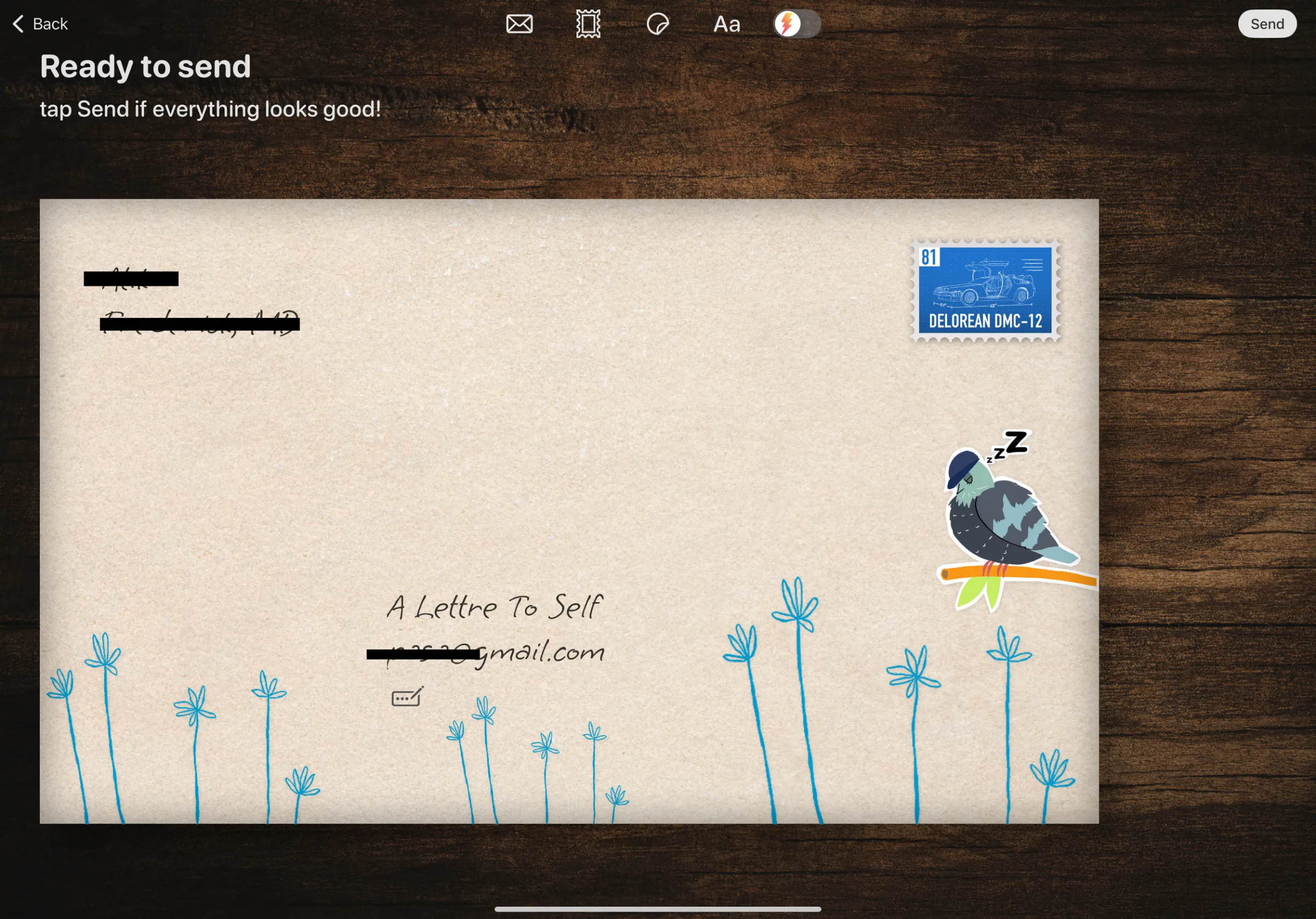
When you open Lettre and begin to write, you are joining something old. The traditions behind you are vast and varied and extraordinary. You are finding someone, somewhere, and saying: here is some of my time. Here is the part of me that is too slow for a notification.
It has always been worth it.