Pippin’s Route: Charles Darwin’s Letter That Traveled an Empire
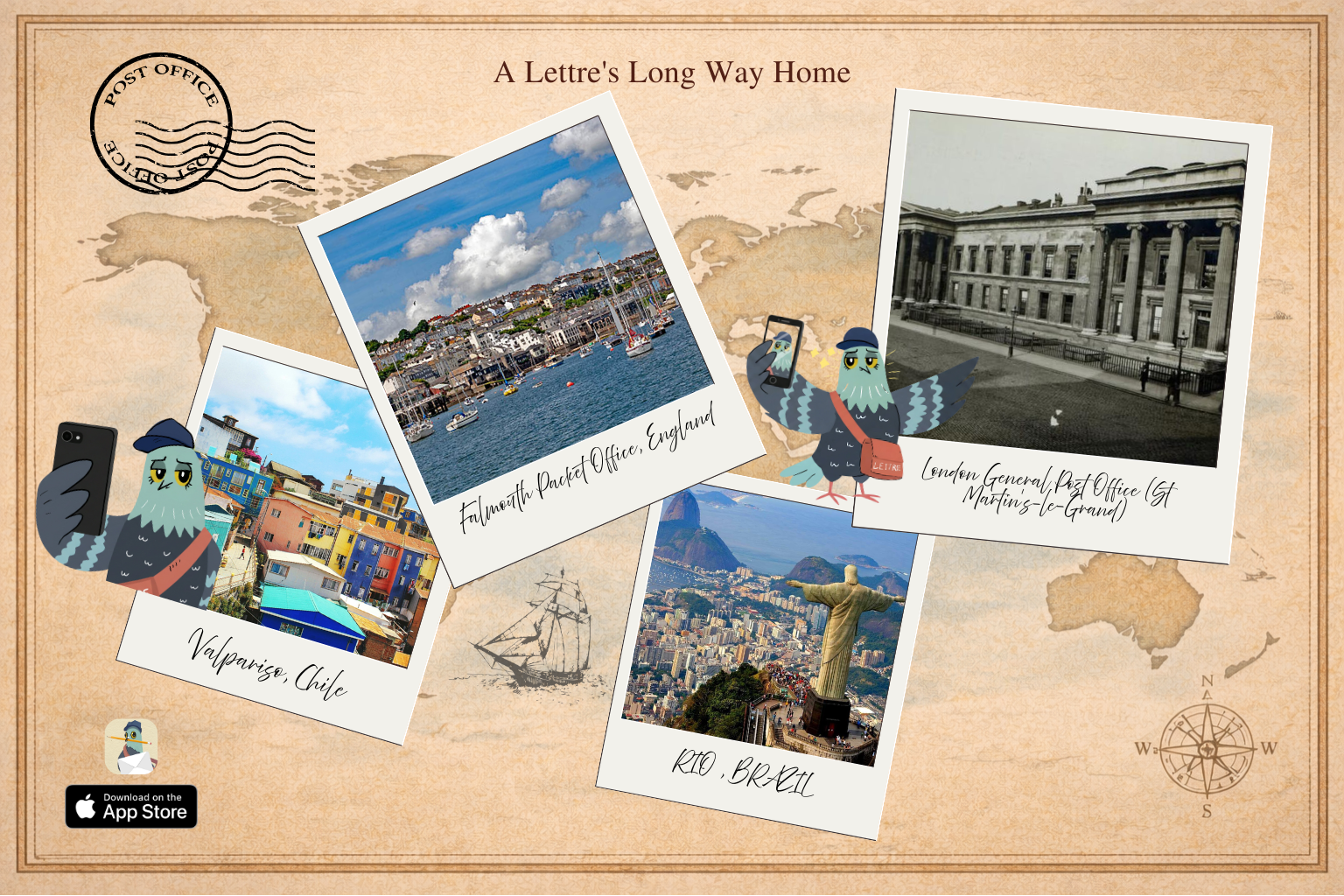
Pippin’s selfies along the way
In 1831, a 22-year-old Charles Darwin stepped aboard the HMS Beagle, beginning a voyage that would eventually reshape how humanity understands life itself. But long before his theories reached the world, his letters traveled first. Slowly, physically, and across vast imperial networks.
This blog traces the realistic postal journey of one such letter Darwin wrote during the South American leg of the Beagle voyage, following its path back to England through the 19th-century postal system.
How Letters Moved in Darwin’s Time
In the 1830s, letters did not move directly from sender to recipient. They relied on ports, packet ships, national post offices, and regional mail routes, often taking months to arrive. Each stop added time, risk, and human effort.
The route below reflects how a Darwin letter would plausibly and historically have traveled.
📝 1. Port of Dispatch: Valparaíso (Chile) or Rio de Janeiro (Brazil)
Darwin wrote many letters aboard the HMS Beagle while it was anchored along the South American coast. However, letters could only enter the mail system once the ship reached a port with a functioning postal network.
Two of the most likely dispatch points were:
Valparaíso, a key Pacific naval and trade port
Rio de Janeiro, one of the most important Atlantic mail hubs in the British imperial network
At these ports, Darwin’s letter would have been handed to local mail agents or British packet services, sealed into a mailbag, and prepared for overseas transport.
This was the moment the letter stopped belonging to Darwin and began its own journey.
⚓ 2. Atlantic Crossing → Falmouth Packet Office, England
From South America, the letter would travel aboard a merchant vessel or Royal Mail packet ship, crossing the Atlantic under unpredictable conditions.
Its first point of arrival in Britain would almost certainly be Falmouth, Cornwall: the main entry port for overseas mail during the early 19th century. Here, international letters were logged, sorted, and forwarded inland.
For many letters, simply surviving this ocean crossing was an achievement.
🏛️ 3. London General Post Office (St Martin’s-le-Grand)
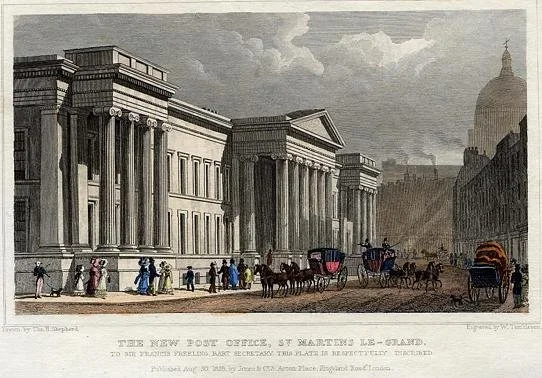
London General Post Office
(*Source:-Exploring London*)
After leaving Falmouth, the letter would travel by mail coach to London, arriving at the General Post Office at St Martin’s-le-Grand.
Completed in 1829, this imposing building was the administrative heart of Britain’s postal system. Mail from across the empire passed through its halls before being redistributed nationwide.
Darwin’s letter would have been stamped, recorded, and redirected here, another pause before the final stretch.
🏠 4. Shrewsbury, England. Final Delivery!
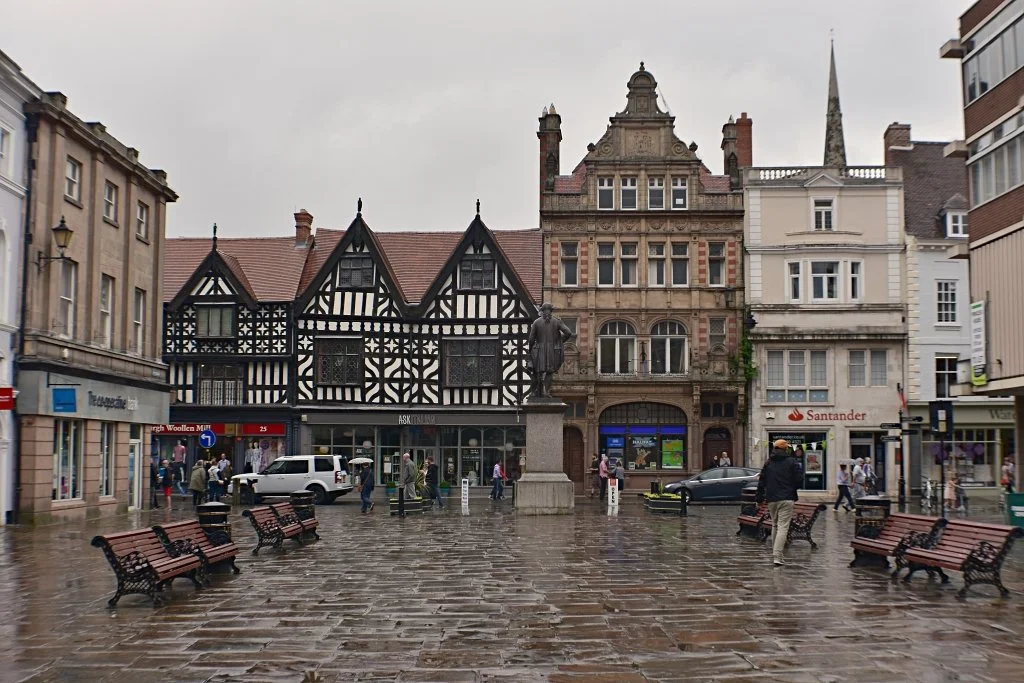
A modern picture of Shrewsbury, England
From London, the letter would be sent onward to Shrewsbury, Darwin’s family home. This final leg relied on regional mail coaches and local postal carriers.
By the time the letter arrived, months may have passed since it was written. The landscapes Darwin described might already have changed behind him. But the connection remained.
Why This Route Matters
Darwin’s ideas did not spread instantly.
They traveled slowly, physically, and at risk.
Every letter depended on ships that could sink, routes that could close, and people who had to care enough to pass it on correctly. Communication was not just about information, it was about endurance.
That effort gave letters weight.
Lettre Takeaway
This wasn’t a message.
It was a voyage.
Lettre Rarity Scale: 7.5 / 10
(Not rare for what it said but rare because journeys like this no longer exist.)
Estimated distance traveled: Several thousand kilometers
Estimated time in transit: 2–6 months
Current status: Many Darwin letters are preserved and documented by the Darwin Correspondence Project